Showing posts with label therapy. Show all posts

Thursday, April 16, 2015

Earth Day is for Sorting (the Trash)

There is nothing like a real world activity to teach and target our little ones language and concepts.

Earth day is the perfect opportunity to talk about why we need to keep our planet green and ways to do it. Different activities can be used to target vocabulary, answering simple wh- questions, classification, and more. The most popular activity I've discovered is sorting a pile of trash and recycling items.

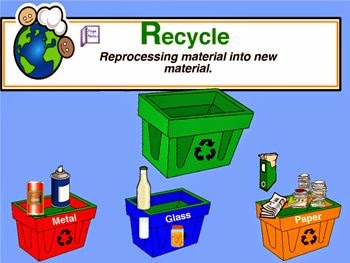
So how do we know what needs to be recycled? The CalRecylce site will give you a refresher on what can and can't be recycled. For this activity, I suggest keeping it simple. The categories I like to have my kids sort into are:

Plastic     Metal     Paper     Organic     Trash

For little ones, first define each of those terms. How do we know something is made of plastic? Is it clear and bendable? What does organic mean? Was it something we ate? Does it grow in the ground? Now decide. Put it in the trash? Recycle? What's it made of? A great opportunity for critical thinking would be to ask can we save it? Can it be reused?

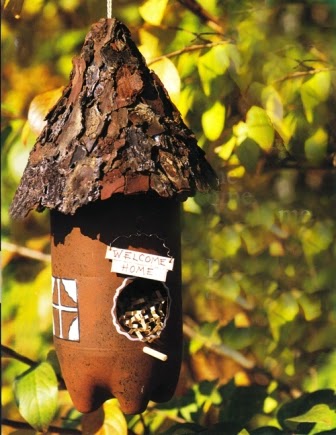
One of my favorite activities is a bird feeder made out of cartons or plastic bottles. I prefer to make something useable that is also an art activity. That way it serves a function without needing to be displaying the children's art museum that is my house.

If you can't do it with real garbage or if your kids are so into sorting (time to recruit them for chores), use this cut and sort activity.


And here in the Bay area, it's going to be another beautiful weekend. There are a plethora of Earth Day events to choose from if you want to spend it outside. Here are some:

Earth Day in Santa Cruz - April 18
Earth Day at the San Francisco Zoo - April 19
Muir Woods Free Admission Day - April 18-19
Earth Day Celebrations - Los Altos Hills, April 26

Happy Earth Day!
Michelle Lachman
Schedule your free consultation today: 1.408.365.4423 / mlachman.speech@gmail.com


Friday, February 13, 2015

P-A-C-E Yourself. Or Just Your Speech.

Did your mother ever tell you to pace yourself? My mom certainly did.

I find myself telling my kids to slow down when they are eating, going down the stairs, and even when they are trying to recall something that happened during the day. Often, the race to talk comes from competition for talk time (for those with siblings), competition for a parent's attention or just excitement.

Just in time for the weekend, when we should, as families, be slowing down but are instead sometimes speeding up to get all of the chores, errands, birthday parties and whatever else done.

When it comes to slowing down a child's speech, telling them to "slow down" doesn't often help. Either because their slowed down speech doesn't last of because they don't really understand what they should be slowing down. So I'll share one of my most trusted tools for kids who's goal is to pace themselves. It's easy to make on your own, travel with and model for your kids. It's a pacing board.

Here is a list of the ways I use pacing boards in therapy:

- To pace out sentences such as "I-want-milk-please."
- To help slow down fast talkers. I demonstrate how to slow down their speech with use of a pacing board and let them imitate me.
- To help kids who are omitting sounds or words. A pacing board can help model to them that they need to say every sound in a word.

Here is a picture of a pacing board. I show the kids I treat how to tap a flower for each word or syllable. You can also place a doll on a flower for each word,  drive a car onto the board, or put a cracker. The possibilities are endless.

For those of you with Thomas the Tank Engine trains, you can do similar activities with the separate cars. Here's a picture from a parent of a child I treat. She used soft blocks which her daughter squeezed for each sound they were trying to articulate. 


How do you slow down?

Michelle Lachman
Schedule your free consultation today: 1.408.365.4423 / mlachman.speech@gmail.com

Thursday, February 5, 2015

Parent Question: My four year old has a lisp. Help!

Parents have a lot of questions when it comes to speech and language development and don't always have a reliable place to get an answer. On this blog, I'll post some of the most common questions I get and ideas on what to do. Send me your questions to mlachman.speech@gmail.com.

Q: I have a four year old boy who's name is Sam. When he says his name or any other word with an 's' in it, he makes the 's' sound as a 'th' sound. So if people ask him his name he says "Tham." I think my son has a lisp. Help!

A: I know lots of parents who have brought up this very concern. In fact, both of my kids did the same thing. My son even stopped at age 5 and then started back up again about six months later.

The type of lisp this parent is describing is called a "frontal lisp" (or interdental lisp). That's when a person has difficulty producing the 's' or 'z' sound because of their tongue placement. The tongue may stick out between the teeth a bit which results in a sound distortion.

In children Sam's age a frontal lisp is considered developmental and speech language therapists may not suggest therapy. Developmental norm data suggests that a frontal lisp may even occur until age 7 or 8. What is important to remember is that a young child with a frontal lisp will not have any difficulty communicating and should not become frustrated. In Sam's case, his parent may not choose to wait until 7 or 8 if the lisp does not eliminate on its own. But only because Sam's name is "Sam" and the sound distortion might eventually become noticeable (and not as cute) to adults and peers.

If Sam still does not outgrow his lisp around age 5 or 6 therapy may be recommended. Here is what I might suggest:

- Therapy once a week (for 1 month) to teach proper placement and train parents in beneficial activities at home for carryover
- 1 therapy session per month for the next 2-3 months to make sure proper placement has carried over and the child is able to make the proper sound independently
- Teach the child to bite down, and blow air through his teeth with a gentle smile
- Teach the child to keep their snake (tongue) in its house (mouth)
- Encourage parents to make activities targeting the sound fun
- Suggest books that focus on the 's' sound like Sid and Sam by Nola Buck and Silly Sally by Audry Wood
- Encourage confident communication

Of note: A lateral lisp may sound similar but occurs when air escapes over the sides of the tongue (not the front of the tongue like a "frontal" lisp). A lateral lisp can sound "wet" and "slushy" due to saliva. This type of lisp is not developmental. Parents should consult with a speech language therapist if their child sound like they have a lateral lisp. Therapy could begin as early as 4 years of age.

Michelle Lachman
Schedule your free consultation today: 1.408.365.4423 / mlachman.speech@gmail.com