Showing posts with label Language. Show all posts

Thursday, April 16, 2015

Earth Day is for Sorting (the Trash)

There is nothing like a real world activity to teach and target our little ones language and concepts.

Earth day is the perfect opportunity to talk about why we need to keep our planet green and ways to do it. Different activities can be used to target vocabulary, answering simple wh- questions, classification, and more. The most popular activity I've discovered is sorting a pile of trash and recycling items.

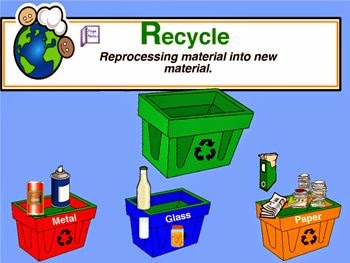
So how do we know what needs to be recycled? The CalRecylce site will give you a refresher on what can and can't be recycled. For this activity, I suggest keeping it simple. The categories I like to have my kids sort into are:

Plastic     Metal     Paper     Organic     Trash

For little ones, first define each of those terms. How do we know something is made of plastic? Is it clear and bendable? What does organic mean? Was it something we ate? Does it grow in the ground? Now decide. Put it in the trash? Recycle? What's it made of? A great opportunity for critical thinking would be to ask can we save it? Can it be reused?

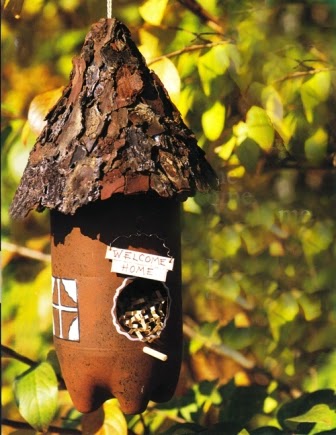
One of my favorite activities is a bird feeder made out of cartons or plastic bottles. I prefer to make something useable that is also an art activity. That way it serves a function without needing to be displaying the children's art museum that is my house.

If you can't do it with real garbage or if your kids are so into sorting (time to recruit them for chores), use this cut and sort activity.


And here in the Bay area, it's going to be another beautiful weekend. There are a plethora of Earth Day events to choose from if you want to spend it outside. Here are some:

Earth Day in Santa Cruz - April 18
Earth Day at the San Francisco Zoo - April 19
Muir Woods Free Admission Day - April 18-19
Earth Day Celebrations - Los Altos Hills, April 26

Happy Earth Day!
Michelle Lachman
Schedule your free consultation today: 1.408.365.4423 / mlachman.speech@gmail.com


Friday, February 13, 2015

P-A-C-E Yourself. Or Just Your Speech.

Did your mother ever tell you to pace yourself? My mom certainly did.

I find myself telling my kids to slow down when they are eating, going down the stairs, and even when they are trying to recall something that happened during the day. Often, the race to talk comes from competition for talk time (for those with siblings), competition for a parent's attention or just excitement.

Just in time for the weekend, when we should, as families, be slowing down but are instead sometimes speeding up to get all of the chores, errands, birthday parties and whatever else done.

When it comes to slowing down a child's speech, telling them to "slow down" doesn't often help. Either because their slowed down speech doesn't last of because they don't really understand what they should be slowing down. So I'll share one of my most trusted tools for kids who's goal is to pace themselves. It's easy to make on your own, travel with and model for your kids. It's a pacing board.

Here is a list of the ways I use pacing boards in therapy:

- To pace out sentences such as "I-want-milk-please."
- To help slow down fast talkers. I demonstrate how to slow down their speech with use of a pacing board and let them imitate me.
- To help kids who are omitting sounds or words. A pacing board can help model to them that they need to say every sound in a word.

Here is a picture of a pacing board. I show the kids I treat how to tap a flower for each word or syllable. You can also place a doll on a flower for each word,  drive a car onto the board, or put a cracker. The possibilities are endless.

For those of you with Thomas the Tank Engine trains, you can do similar activities with the separate cars. Here's a picture from a parent of a child I treat. She used soft blocks which her daughter squeezed for each sound they were trying to articulate. 


How do you slow down?

Michelle Lachman
Schedule your free consultation today: 1.408.365.4423 / mlachman.speech@gmail.com

Tuesday, February 3, 2015

Have You Seen What's on View at the San Jose Museum of Art?

Sh! No talking at the museum. People are looking at the art.

OK, so I wouldn't go to the museum with my kids if we were practicing our inside vs. our outside voice. But I would go see what's on view at the San Jose Museum of Art where are short stroll let's me target deductive reasoning and storytelling.

So what's on view? The first exhibit called Momentum: An Experiment in the Unexpected is open until February 22, 2015, so go see it soon.

While the artists explore the ideas of movement and the passage of time, kids can explore Slip by Tony Oursler. It's green and sort of smiles at them. Who wouldn't have something to say?

There's some more time to go see the Koret Family Gallery: Maker Space, on view until January 2016.  This exhibit is really inspirational and get you thinking about how art can be made out of so many materials. The artists upcycle objects thrown away to make art. Sounds like what my kids do with milk boxes in kindergarten. Just take a look at Three More Flags by Ray Beldner, made out of dollar bills and thread.
So what's there to talk about? Well other than what we all might first notice about art: color, shape, or materials, parents can engage their kids in some other activities that will promote concepts I target in language therapy such as deductive reasoning and storytelling.

Deductive reasoning is the process of reasoning from one or more statements to reach a logical conclusion. For example, all oranges are fruits, all fruits grow on trees. Therefore, all oranges grow on trees. Deductive reasoning helps us understand the world around us.

So, you know how to play I Spy. While exploring the Maker Space, give your kids some clues:

I'm thinking of something hanging on the wall (...so not a sculpture)
It's made of something we pay with (...so money)

See how many clues you need to give? Can your kids give you clues?

Want a challenge for kids who are a bit older? Watch the Abbot & Costello classic Who's on First, to laugh and use deductive reasoning (and listening skills) to figure out who's on first!

At the Momentum exhibit, get your kids to create a story. Speech language therapists are always targeting story elements, especially when providing services to kids in school. Story elements include title, character, setting and order of events. You can first model making up a story:

The title of my story is Mrs. S slips to Sacramento.
Once there was a slippery Mrs. S who loved to slip away from her house to explore...

Without being too explicit, these two sentences model coming up with a title, a main character, a setting, and an initiating event (she likes to slip away to explore). See what your kids can come up with and use the art at the museum as a starting point.

Have fun.
Michelle Lachman
Schedule your free consultation today: 1.408.365.4423 / mlachman.speech@gmail.com

APP Review: MarcoPolo Weather (and a book to follow up)

I live in Silicon Valley so how can I not bring up tech and the weather? New websites, apps, and technology for kids pops up all around like mushrooms after the rain (Speaking of rain.. can we get some more here for winter?).

I'm first to admit that I give my kids monitored and limited tech time. But how's a parent to choose the right one?  Well, lots are great, but a review and recommendation are always nice. I came across MarcoPolo Weather by MarcoPolo Learning Inc  (for Iphone and Ipad) which is a great app to get preschoolers making big small-talk about the weather.

The app lets kids explore the amazing world of weather. They can create a rainy day, snowstorms, sunny days and more.

Parents can target lots of concepts and vocabulary such as colors, clothing types, things you see in difference types of weather (think snowman for winter or a picnic basket in the summer), comparative adjectives (colder, hotter).

Pair this app with a book about weather before bedtime. Freddy the Frogcaster (available on Amazon in print or on Kindle) is fun and educational.  It lets parents continue the conversation while Freddy saves the day when the town picnic is almost ruined by a storm.

I love how descriptive author and meteorologist Janice Dean gets... Clouds are puffy and white, the day is sunny with a light breeze. My kids asked me how Freddy saw his own breath on a cold day, so we had to go outside, early the next morning to experiment.

What I also love about this book are the calls to action. Freddy speaks directly to the kids, "Quick! Look. Right over there outside your window. What do you see?"He uses big words (Cumulus cloud, meteorologist) and defines them using a picture as well.

After playing with the app and reading the books my kids became professional small-talkers. I caught my daughter telling her preschool friend, "It's a nice day today. Sunny and no clouds."

Have a sunny day.
Michelle Lachman
Schedule your free consultation today: 1.408.365.4423 / mlachman.speech@gmail.com

Monday, February 2, 2015

Shopping (for words) with your kids in tow.

Speech and language therapy session are important for toddlers with delayed language abilities. Yet as a speech therapist, I often try to make it a point to remind parents that the time I spend with their child is significantly less than the amount of time they spend with their child.

For me it is of critical importance to spend the last 5 minutes of a session talking with parents, or even better showing parents some of the therapy techniques I use. This has proven to work better than sending long lists or homework to be completed. I'm a parent too. I know there is just too much to get done without having someone adding to my "to do list." So, what I try to do is encourage parents to integrate learned skills into everyday, family centered activities. From shopping at the supermarket to setting the table to cleaning up toys. All children, including those with language delays or disabilities use simple language to express themselves. They are just in process of learning to use more "grown up" language, which they hear from parents, older siblings or teachers. Two ways I use to help develop children's language skills are with language expansion and language extension.  

Language expansion “expands” a what a child has said. So when talking with a child, use adult grammar but do not add new information. For example, if your child says, "daddy home," you could say, "Yes, daddy is home." If your child says, "Him tired?," you could respond, "Is he tired?"

Language extension
“extends” what a child has said. When speaking with your child,  child, use adult grammar and add new information. For example, if your child says, "Car go," and you could say, "The car is going. It's a blue car."

There are so many opportunities to expand and extend your child’s expressive language skills throughout the day. A parent has the power to model a helps the child learn new vocabulary, grammar, stress and inflection.

So let's go on a pretend trip to the supermarket.
  
Vocabulary: Color are everywhere! As your toddler helps you put some apples in a bag, she might say "Apple!" Expand the sentences by saying, "Yes, apple." Extend the sentence by saying, "That is an apple. A red apple."

Concepts: Did you let your child put something in the cart? Spatial concepts are great to know, especially for following directions. If he says "cart" after he put the cereal in the cart, you could expand by saying, "It's a cart." Extend the concept by saying, "Put it in the cart."

Grammar: Toddlers are learning certain simple grammatical elements such as the possessive 's. Did you find daddy's favorite ice cream? Your son might yell, "Ice cream!" Expand it by saying "Yes we found ice cream!" Extend his grammar by extending and say, "It's daddy's ice cream."

Of course, some kids just don't want to go shopping. And let's admit it, sometimes shopping alone is a great way to escape. As parents there is so much on our plates to get done. Sometimes its OK for a trip to the to be just a that and not a learning activity. If the time is right, any activity can provide a chance to model new forms of expressive language. From playing ball in the part, to taking a bath.

Don't forget your shopping list. 
Michelle Lachman
Schedule your free consultation today: 1.408.365.4423 / mlachman.speech@gmail.com

Wednesday, August 28, 2013

The Vocabulary Monster is Coming


A great app that kindergarten and first grade students will enjoy (and parents will too) is Endless Alphabet from Callaway Digital Arts. This phonics-meets-vocabulary app is put together just right.  Each letter sings out its own letter sound with flair as children drag it into place to form the word, and when the word is completed, a highly entertaining short animation plays to demonstrate the meaning of the word.  You can’t go wrong with this one.

It's available for iPad and iPhone here

From the Developer:
Set the stage for reading success with this delightfully interactive educational app. Kids will have a blast learning their ABC’s and building vocabulary with the adorable monsters in Endless Alphabet. Each word features an interactive puzzle game with talking letters and a short animation illustrating the definition. Before you know it, your child will be using words like gargantuan and cooperate!

Features:

- Over 50 words to learn and play with
- Delightful animations teach children the definitions of the words in a fun and engaging way
- Word game teaches children letters
- Endless Alphabet was designed with your children in mind – there are no high scores, failures, limits or stress. Your children can interact with the app at their own pace.